.png)


Concept Note
10th International Conference on “Advanced Technologies & Innovations in Tourism & Hospitality Industry” (ATITHI-2025)
6–7 December 2025 | Swami Vivekanand Subharti University, Meerut
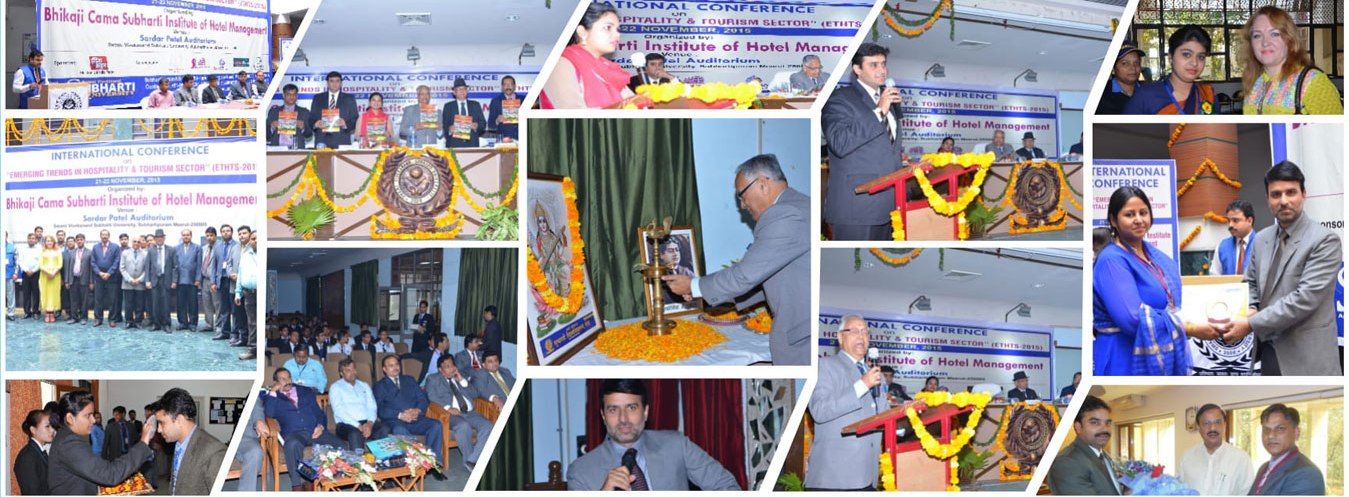
The tourism and hospitality industry stands at a transformative juncture as advanced technologies redefine how destinations are developed, promoted, and experienced. With accelerating digitalization, travellers now demand seamless, intelligent, and personalized services that are efficient, safe, and sustainable. As global markets evolve, hospitality businesses are compelled to adopt emerging tools such as Artificial Intelligence (AI), robotics, smart hotels, Internet of Things (IoT), augmented and virtual reality, predictive analytics, and automation-enabled service environments. These innovations have not only reshaped operational models and customer experience strategies but have also influenced workforce competencies, managerial decision-making, and organisational sustainability.The 10th International Conference on ATITHI-2025 aims to provide a distinguished academic platform for global scholars, researchers, industry practitioners, policymakers, and students to examine the dynamic intersection of technology and hospitality. As the conference completes a decade of scholarly contribution, ATITHI-2025 focuses on advancing discourse on how innovations can transform service delivery, enhance competitiveness, support sustainable practices, and redefine the future of tourism ecosystems. The hospitality sector in India is undergoing rapid digital transformation, particularly in areas such as online travel services, automated operations, cloud-based management systems, environmentally responsible innovations, and data-driven customer engagement. Recognising these developments, the conference theme emphasises the integration of next-generation technologies that align with the expectations of contemporary travellers while upholding global sustainability goals.
The conference further seeks to address critical gaps in research on technology adoption, human–machine collaboration, green innovations, and the socio-economic implications of automation in hospitality. By drawing contributions from multidisciplinary fieldsincluding tourism management, smart technologies, digital marketing, environmental sciences, artificial intelligence, operations management, and behavioural studiesATITHI-2025 intends to foster a deeper understanding of the challenges and opportunities presented by this technological shift. With competitive pressure increasing across international destinations, innovations such as service robots, autonomous check-ins, immersive guest experiences, blockchain-enabled transactions, and advanced cybersecurity frameworks require systematic academic inquiry and stakeholder dialogue. The conference aims to stimulate such discussions through specialized thematic tracks, keynote lectures, panel sessions, and research paper presentations.As the world moves towards tourism models that emphasize safety, efficiency, personalization, and sustainability, the need for resilient and technology-enabled systems becomes paramount. ATITHI-2025 aspires to highlight how collaborative innovation, digital transformation, data-driven policy formulation, and cross-sector partnerships can redefine service excellence in hotels, restaurants, travel enterprises, and destination management organizations. The conference seeks to inspire researchers to generate actionable insights and propose frameworks that contribute to industry growth, workforce preparedness, and customer-centric technological integration.
By bringing together leading voices from academia and industry, the 10th edition of ATITHI continues its legacy of promoting scholarly engagement and innovation-based development. The 2025 conference will play a pivotal role in shaping future tourism landscapes, offering fresh perspectives on how technologies can enhance business adaptability, improve guest satisfaction, strengthen operational resilience, and support global sustainable tourism initiatives. Ultimately, ATITHI-2025 envisions a forward-looking research environment where innovation drives inclusive, ethical, and sustainable transformation within the tourism and hospitality sectors.
Thematic Areas of the Conference
The conference will focus on a broad range of topics related to education, industry and research in hospitality and tourism. The Conference organizer invites papers relevant to the conference theme in hospitality and tourism management. All other type of research manuscripts specifically concerned to other areas of the Hospitality and Tourism will be accepted for presentation in the conference.
Conference Objectives
- To explore emerging technological trends shaping the global tourism and hospitality industry, including AI, big data, IoT, robotics, AR/VR, and blockchain, and to analyse their transformative impact on service systems and stakeholder experiences.
- To provide a multidisciplinary platform for researchers, academics, policymakers, industry practitioners, and students to exchange knowledge, present empirical findings, and discuss contemporary innovations relevant to the sector.
- To evaluate the role of digital transformation in enhancing operational efficiency, improving service quality, and supporting sustainable growth within hotels, restaurants, tourism destinations, and allied service organisations.
- To encourage research-driven insights by promoting rigorous academic discussions on technology adoption challenges, skill development, digital infrastructure requirements, and innovation management within the hospitality value chain.
- To highlight best practices and case studies demonstrating successful implementation of advanced technologies in the tourism and hospitality industry, fostering learning through real-world applications.
- To identify future research directions by assessing knowledge gaps, industry needs, and technological opportunities that can drive innovation, competitiveness, and resilience across the hospitality and tourism sectors.
- To strengthen industry–academia collaboration by facilitating networking opportunities, building partnerships, and promoting collaborative projects that align technological innovation with tourism development goals.